

QMS Software for Construction Industry
Reduce rework, improve project quality, and maintain safety & compliance documentation with a construction-focused QMS Software.

What are the Quality Challenges Faced by the Construction Industry?
Every construction company desires to deliver quality work within the given time frame and set budget limits. Finding a balance between cost, quality, and time proves to be the secret behind the successful completion of the construction project.
But a myriad of challenges disrupt the workflow and impact the project outcome, productivity, budget, timeline and ultimately customer satisfaction as well as profits.
Some of these challenges are:
- Replicating successful practices across different projects
- Non-centralised design changes and modifications leading to discrepancies and confusion
- Absence of set guidelines of working for the workforce
- Workforce training and skill variations
- Regulatory compliance complexities, including building codes, guidelines, and safety regulations
- Communication and collaboration gaps among stakeholders
Request a Free Demo
Implementing a QMS Solutions for Construction Industry can help construction companies address these challenges by providing a systematic and structured approach to quality management, process improvement, and risk mitigation. It enhances the overall effectiveness and efficiency of construction operations, leading to improved project outcomes and customer satisfaction.
One such next-gen and robust QMS software is QualityPro for the construction industry.
Trusted by Industry Leaders








How Does QMS for Construction Industry Help Address These Challenges?
QualityPro is a comprehensive, web-based QMS software solution that simplifies the quality management tasks like Document Management, Risk Management, Complaint Management, Audit Management, NC/CAPA Management, Training Management, Change Management, etc. within a construction company.
Moreover, by documenting, circulating, and adhering to ISO 9001 standards, QualityPro ensures consistency in the operations, reducing the chances of defects and deviations, improving the quality.
Construction quality management software even offers a personalised hub known as the "QMS Cockpit" that allows to control, manage, and access documents, tasks, approvals, and notifications, all from a single focal point.

Features of the Best QMS Solution for the Construction Industry
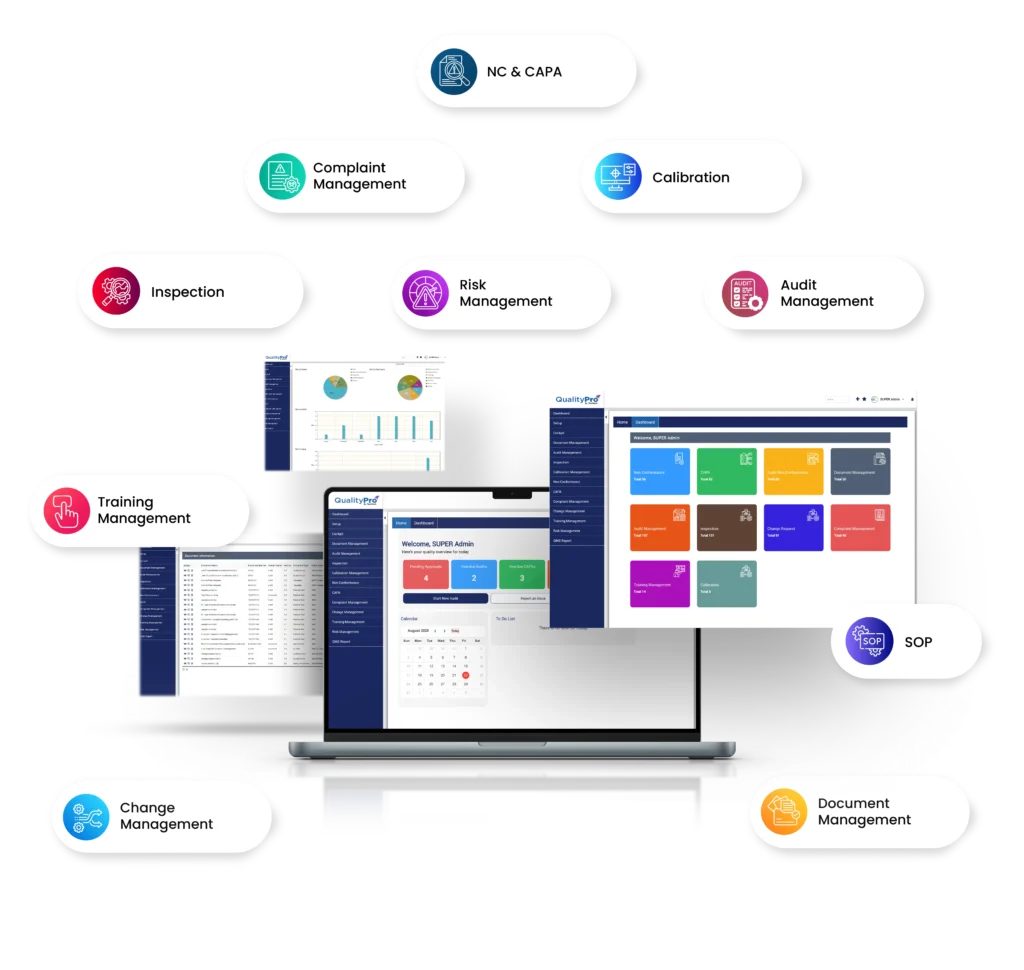
Effectively manage non-conformances such as material deviations, structural defects, or non-compliance with safety protocols. Identify root causes and implement corrective and preventive actions to maintain consistent quality across projects.
Address and track complaints related to project delays, safety issues, or quality discrepancies from clients, contractors, and inspectors. Ensure timely resolution and strengthen stakeholder confidence.
Identify skill gaps in site workers or supervisors related to safety, quality procedures, or equipment handling. Schedule and track mandatory safety and compliance training to keep teams job-ready.
Seamlessly manage design modifications, project scope changes, or updated regulatory requirements. Document and communicate every change to ensure smooth execution without disrupting ongoing work.
Centralise all project-related documents like drawings, contracts, safety reports, permits, and inspection logs. Enable real-time collaboration and version control for teams across multiple sites.
Monitor and mitigate project risks such as cost overruns, schedule delays, equipment failures, or safety hazards. Improve decision-making through proactive risk assessment and analysis.
Prepare for internal and external audits by maintaining complete documentation and compliance with industry standards like ISO 9001, OSHA, and local building regulations. Conduct mock audits to ensure readiness and avoid costly penalties.
Digitally manage and standardise Standard Operating Procedures across all construction phases—from material procurement and site preparation to safety inspections and project handover. Ensure that engineers, contractors, and site teams follow approved procedures to maintain quality, safety, and regulatory compliance.
Plan, conduct, and document inspections for materials, structural works, equipment, and on-site safety practices. Use digital checklists to monitor progress, identify deviations in real time, and ensure adherence to design specifications and safety standards.
Schedule and track the calibration of critical tools and measuring equipment such as concrete testing machines, load cells, and surveying instruments. Maintain accuracy and compliance with ISO and construction quality standards to ensure precise measurements and reliable project outcomes.
Benefits of Using Construction Quality Management Software
Implementing construction QMS solution benefits the construction industry in numerous ways-
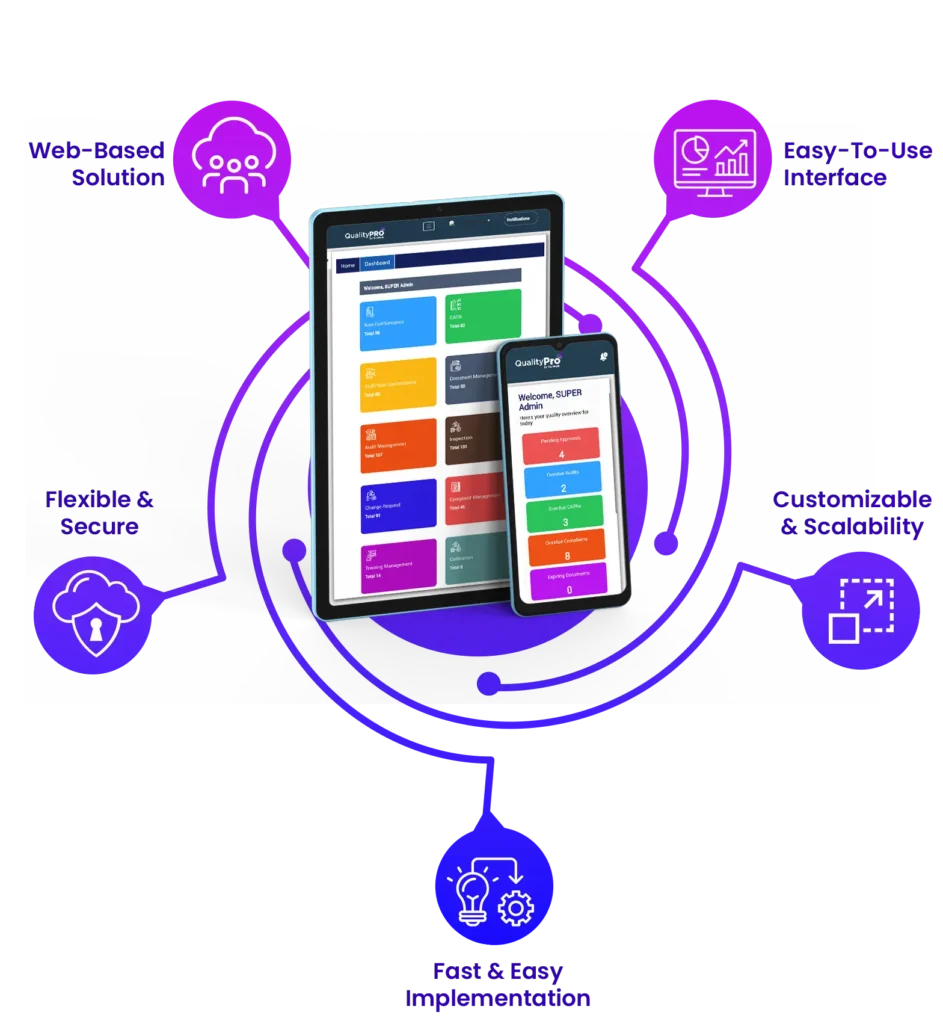
- Effortless Navigation: No technical expertise? No problem! QualityPro QMS boasts a user-friendly design that ensures smooth navigation. It’s simple, clear, and intuitiv
- Web-Based: Enjoy cost-effective implementation with QualityPro’s web-based platform. Experience seamless accessibility, real-time collaboration, and efficient tracking of quality-related tasks. Plus, automated updates ensure compliance with the latest industry standards.
- Customisable to your needs: Designed to adapt to unique data requirements, QualityPro allows businesses to customise fields in line with their specific policies.
- Quick & Flexible implementation: Choose the implementation approach that suits you best—opt for self-implementation or vendor-guided setup for a seamless onboarding experience.
- Built for businesses of all sizes: From startups to large enterprises, QualityPro caters to organisations of all sizes.
- Scalable for future growth: As your business expands, QualityPro effortlessly scales to accommodate increasing demands, ensuring long-term adaptability.
- Secure & Reliable: With authenticated logins, encrypted data, industry-leading security measures, and a robust three-tier backup and recovery system, QualityPro guarantees data security and peace of mind.
“Just one click, and you are one step closer to a transformation”
Know right away how QualityPro can transform your business
Frequently Asked Questions

Construction QMS Software introduces structured and standardised processes that strengthens construction project delivery by minimising defects, ensuring adherence to building codes and statutory regulations, and streamlining construction workflows.
It supports consistent execution across all trades, reduces programme delays, and enhances the overall quality of output through robust quality control and assurance protocols embedded in the project lifecycle.
Quality management is vital in construction to ensure that built assets conform to regulatory standards, reduce the likelihood of remedial works, and exceed client expectations.
A well-structured QMS for construction forms the backbone of site operations by facilitating risk mitigation, upholding workmanship standards, and maintaining Health, Safety, and Environmental (HSE) compliance across all construction phases—from pre-construction to handover.
QMS software for construction industry simplifies statutory compliance through automated recordkeeping, digital audit trails, and live tracking of building regulations and standards.
It enables construction companies to remain aligned with frameworks such as ISO 9001, and industry-specific guidance, ensuring that each phase—from design and procurement to site execution—is carried out in line with best practice and legal requirements.
A QMS facilitates proactive defect prevention through scheduled inspections, and automated Non-Conformance Reporting (NCR). By addressing issues at source, construction teams can reduce material wastage, limit project overruns, and avoid costly remedial actions—ultimately safeguarding project budgets and delivery schedules.
When choosing a QMS solution for construction, look for the following essential features:
- Centralised document control for site drawings, specifications, compliance registers and such
- Automated inspection scheduling and audit trail tracking
- Real-time dashboards and analytics for informed project governance
- Corrective and Preventive Action (CAPA) modules for quality resolution
- Mobile-enabled access for site operatives, supervisors, and contract managers
Small to medium-sized enterprises (SMEs) in construction can leverage a QMS to standardise site procedures, maintain regulatory compliance, and strengthen their reputation through improved build quality.
Scalable QMS for construction company enable SMEs to adopt tiered quality controls, reducing operational risk and positioning them competitively against larger Tier 1 contractors in tendering and delivery.
Best QMS for construction industry promotes transparent, real-time communication among key stakeholders—such as site managers, subcontractors, design consultants, and quantity surveyors—by offering shared access to documentation, task tracking, and quality alerts. This fosters alignment across the supply chain, reduces coordination errors, and enhances issue resolution throughout the work stages.
Absolutely. Construction Industry QMS Software are highly configurable and can be tailored to suit the specific requirements of diverse construction projects—whether residential housing developments, commercial fit-outs, or civil infrastructure works.
Custom-built workflows, trade-specific checklists, and sectoral compliance modules make it possible to align the QMS with project-specific deliverables, timelines, and client requirements.
About Us
QualityPro is an eQMS software by TecWork Global Business Solutions, specially tailored for industries such as Electronics, Manufacturing, Electric Vehicles, Automotive, Food and Beverages, Solar panels, Pipe, Steel and more. TecWork Global Business Solutions, the parent company, endeavours to converge cutting-edge technology with business excellence. At TecWork, we are dedicated to empowering businesses through innovative solutions that specialise in and seamlessly align with diverse business objectives such as fleet management software, field force management software, and others.